
Throughout March, you may notice more information and reminders about colon cancer screening. That’s because March is Colorectal Cancer Awareness Month, a time to highlight the importance of screening and early detection.
Screening plays a critical role in preventing colorectal cancer and detecting it early. Through screening, healthcare providers can find precancerous polyps or identify cancer at an earlier stage, often before symptoms appear, when treatment is most effective.
At the same time, cases among younger adults are rising. According to the American Cancer Society, colon cancer rates have been increasing by 1% to 2% each year since the mid-1990s in people younger than age 55. That makes awareness and early detection more important than ever.
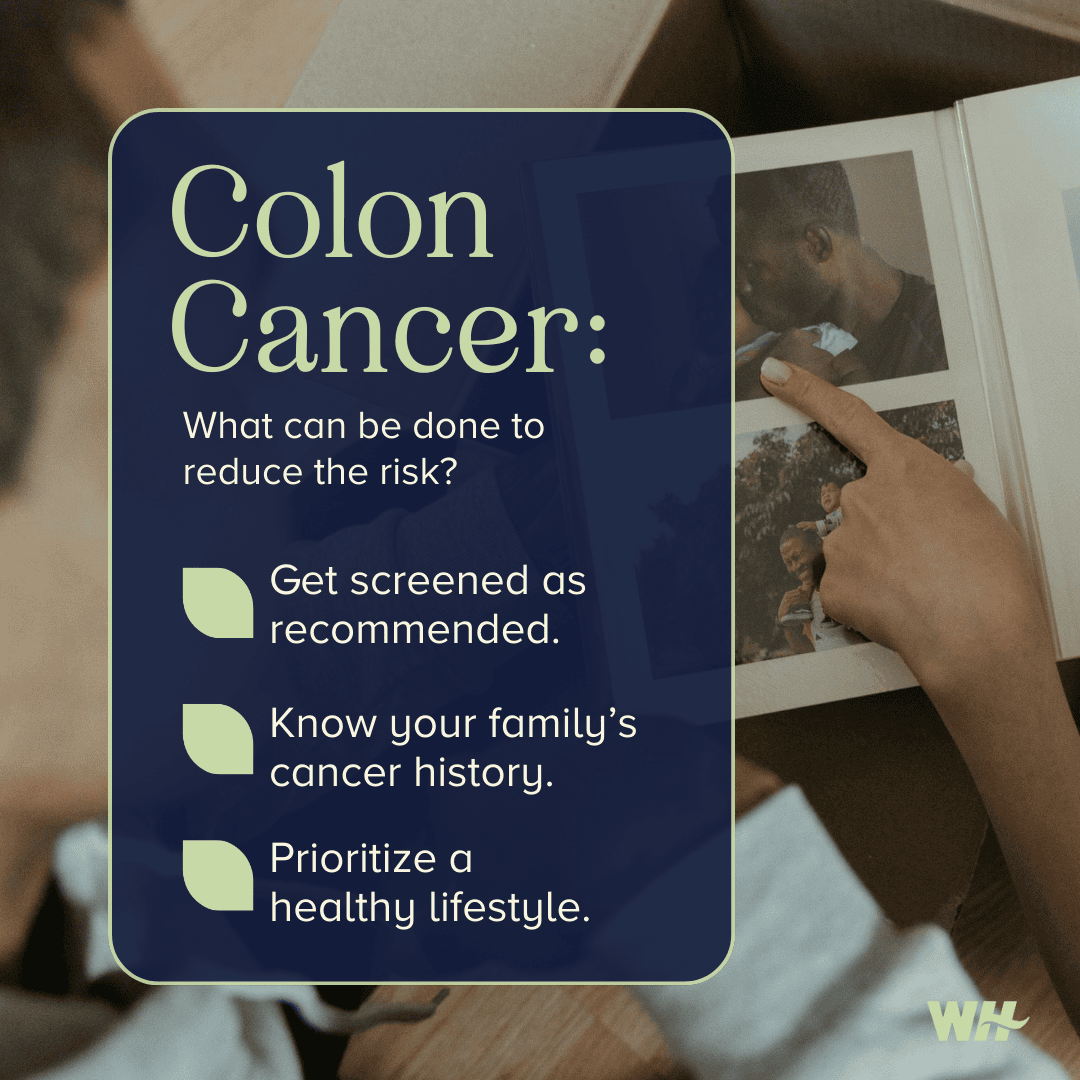
Most people should begin screening at age 45, though those with certain risk factors may need to start earlier. Talking with your healthcare provider about your family’s cancer history can help determine the right screening option and schedule for you.
In addition to recommended screening, there are steps you can take to help lower your risk.
Here’s what you can do to reduce your chance of developing colon cancer:
- Get screened as recommended, starting at age 45 — or earlier if you have certain risk factors. Screening can find precancerous polyps and detect cancer early.
- Know your family history of cancer so your provider can determine whether earlier screening may be right for you.
- Maintain a healthy lifestyle and a healthy weight.
- Eat a high-fiber diet, including fruits, vegetables and whole grains.
- Limit red and processed meats, such as beef, pork, lamb, bacon, sausage, deli meats and hot dogs.
- Limit alcohol intake to no more than one drink per day for women and two per day for men.
- Don’t smoke.
- Pay attention to your body and talk with your healthcare provider if you notice symptoms such as blood in your stool, ongoing constipation, changes in bowel habits or unexplained weight loss.
Even if you take steps to lower your risk, screening remains the most effective way to catch colon cancer early—or prevent it altogether.
Have you been screened? If you need a primary care provider to help coordinate the health screenings you need, learn more at winonahealth.org/primarycare or call 507.454.3650.